Last date for full Submission Deadline:
Last date for full Notification of Acceptance:
Last date for Registration Deadline:
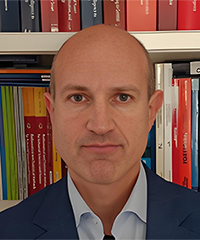
Professor, Applied Physics and Vinton Hayes Senior Research Fellow in Electrical Engineering, Harvard University, USA.
Research field: very high power continuous-wave QCLs, the design of new light sources based on giant optical nonlinearities in quantum wells such as widely tunable sources of terahertz radiation based on difference frequency generation and with plasmonics.
Prof. Federico Capasso is the Robert Wallace Professor of Applied Physics and Vinton Hayes Senior Research Fellow in Electrical Engineering at Harvard University. With an illustrious career spanning several decades, he has significantly impacted the field of photonics and nano-optics. His work in Bandstructure Engineering and Quantum Cascade Lasers (QCLs) revolutionized heterojunction devices in photonics and electronics. The invention of Quantum Cascade lasers, a highlight of this research, has revolutionized mid-infrared photonics, finding widespread use in various scientific and industrial applications. Additionally, his pioneering research in Metasurfaces and Flat Optics introduced subwavelength structured surfaces as a powerful tool for wavefront control, leading to the development of metalenses with superior aberration control compared to conventional optics. Prof. Capasso's contributions also include fundamental studies on Casimir forces, exploring quantum electrodynamical forces and their potential applications in MEMS technology. Beyond his academic achievements, Prof. Capasso co-founded companies such as EOS Photonics and Metalenz, focused on bringing breakthrough technologies to market.He has been recognized with numerous honors and awards, including the 2023 Lifetime Achievement Award from the Italian Scientists and Scholars in North America Foundation (ISSNAF) and the 2021 Frederic Ives Medal and Jarus W. Quinn Prize from the Optical Society of America.
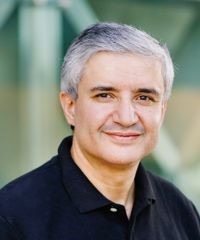
Professor, Aveiro University, Portugal.
Research field: Modelling and characterization of multi-section semiconductor lasers for coherent systems; quantum well lasers; optical fiber amplifiers and lasers, optical sensors; soliton propagation; polarization and nonlinear effects in optical fibers.
Mário F. S. Ferreira is a Professor at the Physics Department of Aveiro University, Portugal. Between 1990 and 1991 he was at the University of Essex, UK, performing experimental work on external cavity semiconductor lasers and nonlinear optical fiber amplifiers. He has been the leader of the Optics and Optoelectronics Group of the I3N – Institute of Nanostructures, Nanomodelling and Nanofabrication. He has written about 400 scientific journal and conference publications, and several books, namely: "Optics and Photonics" (Lidel, 2003, in Portuguese), "Topics of Mathematical Physics" (Editora Ciência Moderna, 2018, Brazil, in Portuguese), "Optical Fibers: Technology, Communications and recent Advances" (Ed., NOVA Science Publishers, 2017),"Advances in Optoelectronic Technology and Industry Development" (CRC Press, 2019), "Nonlinear Effects in Optical Fibers" (John Wiley & Sons, OSA, 2011), "Optical Signal Processing in Highly Nonlinear Fibers" (CRC Press, 2020), "Optical Fiber Technology and Applications – Recent Advances" (IOP Publishing, 2021), "Solitons in Optical Fiber Systems" (John Wiley & Sons, 2022), "Dissipative Optical Solitons" (Springer, 2022), "Photonic Crystal Fibers - Recent Advances" NOVA Science Publishers, 2023, "Specialty Optical Fibers - Materials, Fabrication Technology and Applications" (Elsevier, 2024),"Optical Fiber Lasers - Recent Advances and Applications" (to be published by Springer Nature, 2025), and "Lasers Optics and Photonics" (to be published by Oxford University Press, 2025). He was the Guest Editor of four Special Issues of "Fiber and Integrated Optics" (Taylor & Francis): "Fiber Optics in Portugal" (2005), "Nonlinear Fiber Optics" (2015), "Optical Fiber Sources and Amplifiers" (2020) and "Quantum Communications" (2020), a joint Special Issue of "Optics Express" and "Applied Optics" (OSA) on "Optical Sensors and Sensing 2019", one Special Issue of the "Journal of Nonlinear Mathematical Physics" (Springer) on "Complex Ginzburg-Landau Equation", and two Special Issues of "Fibers" (MDPI) on "Optical Fiber Communications" and "Specialty Optical Fibers – Material, Fabrication and Applications" (2022), and and two Special Issues of "Fibers" (MDPI) on "Optical Fiber Communications" (2020) and "Characterization and Applications of Specialty Optical Fibers" (2025). He is a Fellow and a Travelling Lecturer of both OPTICA (Optical Society of America) and SPIE - The International Society for Optics and Photonics, and a Member of IEEE. He served in various committees of OSA/OPTICA and of SPIE, as well as in the organizing and scientific committees of various international conferences. Actually, he serves also as an Associate Editor or as an Advisor Board Member of several international journals in the area of optics and photonics.
Professor, University of Teramo, Italy.
Research field: Artificial intelligence; coding theory; implementation of signal processing and pattern recognition algorithms; fuzzy logic; neural networks and genetic algorithms.
He is a Full Professor of Information Processing Systems (IINF-05/A) in the Department of Communication Sciences. His research fields include artificial intelligence and coding theory. He also works on the implementation of signal processing and pattern recognition algorithms, fuzzy logic, neural networks, and genetic algorithms. He has obtained the national qualification as Full Professor in Computer Science (INFO-01/A). Previously, he served as an Associate Professor (November 2019–October 2024) and as a Fixed-Term Researcher under Art. 24 c.3-b L. 240/10 (2016–2019) and L. 230/2005 (2009–2012) in Computer Science (INF/01) at the University of Teramo. He conducted research on optimization of control systems and database design at the Collurania "V. Cerulli" Astronomical Observatory in Teramo. He is Editor of volumes published by Springer, Elsevier, CRC Press, and Wiley, and serves as Associate Editor for several journals, including IEEE Transactions on Fuzzy Systems, IEEE Transactions on Neural Networks and Learning Systems, IEEE Transactions on Intelligent Transportation Systems, IEEE Transactions on Emerging Topics in Computational Intelligence, IEEE Access, Array (Elsevier), and the International Journal of Machine Learning and Cybernetics (Springer). He is also a member of the Machine Intelligence Research Labs (MIR Labs). He serves as Honorary Professor at the Ramco Institute of Technology, Rajapalayam (Anna University), and at the Rathinam Technical Campus, Coimbatore (Anna University), Tamil Nadu, India, and as Adjunct Professor of Computer Science at the School of Engineering and Technology of Shobhit University, Gangoh, India. He is also Honorary Professor at the Department of Computer Science & Engineering of Galgotias University, Greater Noida, Uttar Pradesh, India. Recognized as a World's Top 2% Scientist (2021–2024) and among the Top 0.5% in the 2024 ScholarGPS rankings, he is frequently invited as a Keynote Speaker and Guest of Honor at IEEE conferences, and he serves as Guest Editor for Special Issues of journals published by Elsevier, Springer, MDPI, AIMS Press, and Inderscience. He has been Chair of IEEE conferences, a member of editorial boards of various international journals, and a member of scientific committees of international conferences. He is the inventor of several patents in artificial intelligence, a member of the Doctoral College in Economic and Social Sciences at the University of Teramo, and holds a Ph.D. in Computational Astrophysics. He earned his degree in Physics from the University of Bologna.
Associate Professor, University of Cassino and Southern Lazio, Italy.
Research field: Image analysis and interpretation; classification techniques, neural networks; biomedical imaging; optical character recognition; map and document processing; smart sensors; IoT; artificial intelligence on the edge and artificial intelligence for cultural heritage.
Mario Molinara Received an MSc degree in Computer Science from the University of Sannio in 1999 and a Ph.D. Degree in "Computer Science and Telecommunication" from the University of Salerno in 2003. In 2004 he joined the Department of Electrical and Information Engineering (DIEI), where is now an Assistant Professor in Computer Science and Artificial Intelligence at the University of Cassino and Southern Lazio. He has authored over a hundred research papers in International Journals and Conference Proceedings. He has been guest editor of special issues on "Pattern Recognition for Cultural Heritage" and on "Smart Distributed Sensors" hosted in Pattern Recognition Letters. He is guest editor of a special issue on "Pattern Recognition Systems for Cultural Heritage" hosted in Journal of Imaging (MDPI). He is a member of the editorial board of the "Journal of Ambient Intelligence and Humanized Computing" (Springer Verlag), and a member of the Topical Advisory Panel of the Journal of Imaging (MDPI). He has been chair of PatReCH "Pattern Recognition for Cultural Heritage" International Workshops held in conjunction with ICIAP 2019 (1st), with ICPR 2020 (2nd) and ICPR 2022 (3rd). He serve as a reviewer for several conferences and indexed journals such as Pattern Recognition (Elsevier), Expert Systems With Application (Elsevier), Pattern Recognition Letters (Elsevier), Measurements (Elsevier), Journal of Imaging (MDPI), Journal of Biomedical and Health Informatics (IEEE), Access (IEEE), Computers in Biology and Medicine (IEEE), Ambient Intelligence for Humanized Computing (Springer), Transactions on Industrial Informatics (IEEE), Energies (MDPI), etc. He is a member of the International Association of Pattern Recognition (IAPR) and of the IEEE.
Associate Professor of Electrical and Computer Engineering, NYU Abu Dhabi, UAE; Global Network Associate Professor of Electrical and Computer Engineering, NYU Tandon, USA.
Research field: Wireless Communications; Integrated Sensing and Communication; Waveform Design; Localization.
Marwa Chafii received her PhD degree in electrical engineering in 2016, and her Master's degree in the field of advanced wireless communication systems (SAR) in 2013, both from CentraleSupélec, France. Between 2014 and 2016, she has been a visiting researcher at Poznan University of Technology (Poland), University of York (UK), Yokohama National University (Japan), and University of Oxford (UK). She joined the Technical University of Dresden, Germany, in 2018 as a research group leader, and ENSEA, France, in 2019 as an associate professor where she held a Chair of Excellence on Artificial Intelligence from CY Initiative. Since September 2021, she has been an associate professor at New York University (NYU) Abu Dhabi, and NYU WIRELESS, NYU Tandon School of Engineering. Her research interests include advanced waveform design, integrated sensing and communication, and machine learning for wireless communications.
She received the IEEE ComSoc Best Young Researcher Award for Europe Middle East and Africa (EMEA) region, the prize of the best PhD in France in the fields of Signal, Image & Vision, and she has been nominated in the top 10 Rising Stars in Computer Networking and Communications by N2Women in 2020. She served as Associate Editor at IEEE Communications Letters 2019-2021, where she received the Best Editor Award in 2020. Between 2018 and 2021, she was the research lead of the Women in AI organization. She is currently Associate Editor at IEEE Transactions on Communications, serving as vice-chair of the IEEE ComSoc ETI on Machine Learning for Communications and leading the Education working group of the IEEE ComSoc ETI on Integrated Sensing and Communications.
Professor Emeritus, Hong Kong University of Science and Technology, HK, China.
Research field: Computer modeling of various electrooptical effects in Liquid Crystals (LC); Photo-aligning technique for LCD applications; LC devices in fiber optics; Fast multistable ferroelectric liquid crystal devices.
Professor Vladimir G. Chigrinov is Professor of Hong Kong University of Science and Technology since 1999. He is an Expert in Flat Panel Technology in Russia, recognized by the World Technology Evaluation Centre, 1994, and SID Fellow since 2008. He is an author of 6 books, 31 reviews and book chapters, about 333 journal papers, more than 718 Conference presentations, and 121 patents and patent applications including 50 US patents in the field of liquid crystals since 1974. He got Excellent Research Award of HKUST School of Engineering in 2012. He obtained Gold Medal and The Best Award in the Invention & Innovation Awards 2014 held at the Malaysia Technology Expo (MTE) 2014, which was hosted in Kuala Lumpur, Malaysia, on 20-22 Feb 2014. He is a Member of EU Academy of Sciences (EUAS) since July 2017. He got A Slottow Owaki Prize of SID in 2018. He is 2019 Distinguished Fellow of IETI (International Engineering and Technology Institute). Since 2018 until 2020 he works as Professor in the School of Physics and Optoelectronics Engineering in Foshan University, Foshan, China. 2020-2024 Vice President of Fellow of Institute of Data Science and Artificial Intelligence (IDSAI) Since 2021 distinguished Fellow of Institute of Data Science and Artificial Intelligence. He is IETI Fellow since 2019. Since March 2022 he is A Fellow of National Academy of Technology for his contributions to Information Electrical and Electronic Research. He is a Editor in Chief of Liquid Crystal section in Crystals journal since 2023.
Al-Khawarzmi Distinguished Professor, Electrical and Computer Engineering, King Abdullah University of Science and Technology, Saudi Arabia.
Research field: MIMO techniques; multi-hop and cooperative communications; optical wireless communication systems; cognitive radio systems; green communication systems; underwater/maritime communication systems and integrated ground-airborne-space networks.
Throughout his 30-year academic career, Professor Mohamed-Slim Alouini, an IEEE and OPTICA Fellow, has developed analytical and simulation tools for evaluating the performance of radio-frequency and optical wireless communication systems. He has also designed and optimized innovative technologies for emerging wireless networks.
Professor Alouini, a co-founder of KAUST's ECE program, inspires future engineers through his pioneering work in wireless communications. His integrated space-air-ground networks, spectrum sharing schemes, and optical wireless communication systems research shape connectivity's future and embody KAUST's scientific excellence and global impact. Professor Alouini has published numerous conference and journal papers and co-authored the textbook Digital Communication over Fading Channels, published by Wiley Interscience. A former editor of IEEE Transactions on Communications and IEEE Transactions on Wireless Communication, he also served as an editor for IEEE Transactions on Mobile Computing and the Wireless Communications and Mobile Computing journal. He was also a series editor for the IEEE Communication Magazine's Optical Communication and Networks Special Series and the founding field chief editor for the Frontiers in Communications and Networks journal. He is now the Founding Editor-in-Chief for the Nature Partnership Journal (NPJ) on Wireless Technologies (since 2025) and an editor for the IEEE Transactions on Aerospace and Electronics Systems (since 2022).
Professor Alouini has been an IEEE Distinguished Lecturer for the IEEE Communication Society (2016-2017), the IEEE Vehicular Technology Society(2018-2022), the IEEE Aerospace and Electronic Systems Society (2023-2024), and the IEEE Photonics Society (2025).
Professor, University of Larestan, Iran.
Research field: Optics, Photonics, Astronomy, Nanomaterials.
Abdolkarim Afroozeh completed his MSc in the field of Astronomy at Shiraz University, Iran, in 2001, and was awarded a PhD degree in Photonics from Universiti Teknologi Malaysia (UTM) in 2014. He is currently the Associate Professor at University of Larestan, Iran. His research interests lie in microring, optical soliton communications, laser physics, photonics, nonlinear fiber optics, quantum cryptography, nanotechnology, biomedical physics and biotechnology engineering. He has 100 ISI published papers, H-index-27.